I know this feeling because I lived it. For years, I struggled with a constant hum of anxiety that felt like a permanent part of me. It wasn’t until I discovered these simple breathing techniques that I realized I wasn’t broken. I just didn’t have the user’s manual for my own nervous system. This article is that manual.
If you’re looking for simple breathwork exercises for anxiety, you’ve come to the right place. Learning to use your breath is one of the most powerful and accessible tools for your overall mental health. The whirlwind of racing thoughts. When anxiety hits, it can feel like you’ve lost the remote control to your own mind and body. But what if you had a tool to reclaim that control? You do. It’s your own breath. This guide will show you how to use it
The Science of Calm: How Breathwork Affects Your Nervous System
At The Zen Core, we see the breath as more than just a tool to calm down. It is the sacred bridge between your physical body and your subtle energy system (Prana). By mastering your breath, you are not just managing anxiety; you are learning the foundational skill required to consciously direct your life force and awaken your dormant potential.
To understand why breathwork exercises for anxiety are so effective, let’s take a quick look at your body’s operating system: the Autonomic Nervous System. It has two main modes:
Sympathetic Nervous System (The Gas Pedal): This is your “fight-or-flight” response. It gets you ready for action when you perceive a threat (like a work deadline or a stressful conversation). This “fight-or-flight” response is essential for survival, but when it’s constantly active, it leads to chronic stress and anxiety. Your heart rate increases, and your breathing becomes shallow and rapid. Anxiety lives here.
Parasympathetic Nervous System (The Brake Pedal): This is your “rest-and-digest” mode. It promotes relaxation, digestion, and recovery. Your heart rate slows, and your breathing becomes deep and calm. Peace lives here.
Here’s the secret: While you can’t consciously tell your heart to slow down,
you can consciously control your breath. By intentionally slowing down and deepening your breath, you send a direct message to your brain that the threat has passed. This manually activates your “brake pedal,” calming your entire system
3 Simple Breathwork Exercises for Anxiety
Here are three powerful calming breathing techniques to have in your mental toolkit. Think of them not just as a fix for anxiety, but as foundational training for mastering your energy.
1. Box Breathing: The Grounding Breath
Praised by everyone from Navy SEALs to high-level executives, this technique is incredibly effective for grounding yourself and restoring focus under pressure.
- How to do it:
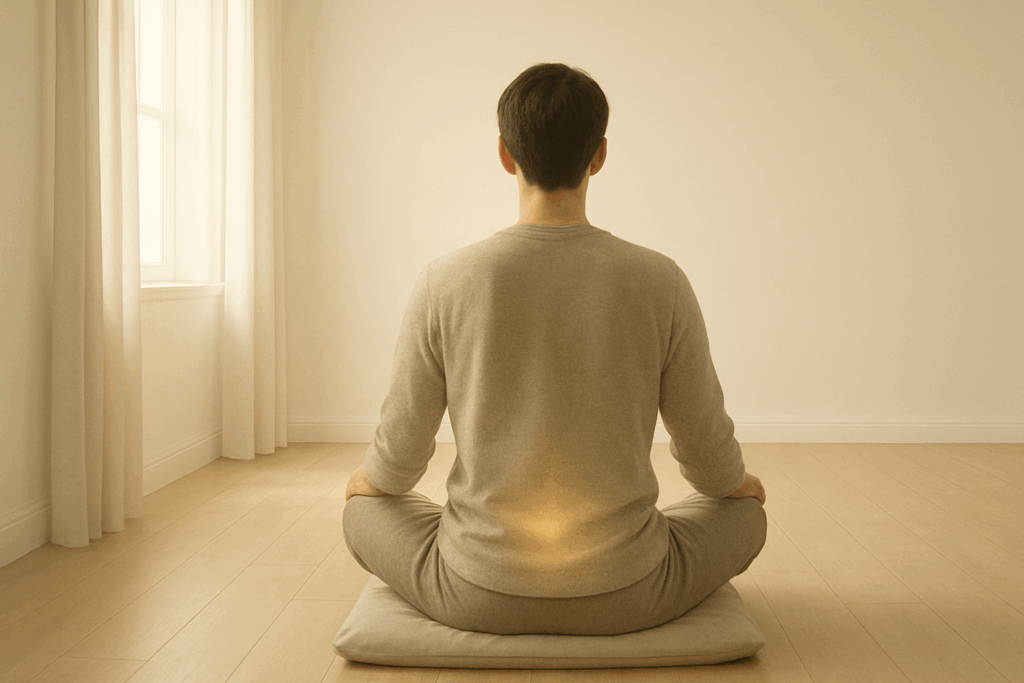
- Sit comfortably with your back straight. Gently exhale all the air from your lungs.
- Inhale through your nose for a slow count of 4.
- Hold your breath for a count of 4.
- Exhale slowly through your mouth for a count of 4.
- Hold the empty breath for a count of 4.
- Repeat this cycle for 1-3 minutes, visualizing drawing a box with your breath.
2. The 4-7-8 Breath: The Natural Tranquilizer
Developed by Dr. Andrew Weil, this breath is known as a “natural tranquilizer for the nervous system” because of its profound relaxing effect. The key is the long exhale.
- How to do it:
- Sit or lie down comfortably. Place the tip of your tongue against the ridge of tissue just behind your upper front teeth.
- Exhale completely through your mouth, making a whoosh sound.
- Close your mouth and inhale quietly through your nose for a count of 4.
- Hold your breath for a count of 7.
- Exhale completely through your mouth, making a whoosh sound, for a count of 8.
- This is one breath. Inhale again and repeat the cycle three more times for a total of four breaths.
3. Alternate Nostril Breathing (Nadi Shodhana): The Balancing Breath
As a classic form of yogic breathing (also known as Pranayama), this technique is designed to bring balance to the left and right hemispheres of the brain, promoting mental clarity and harmony. It’s perfect when your thoughts feel scattered.
- How to do it:
- Sit in a comfortable position. Rest your left hand on your lap.
- Bring your right hand up to your nose. Fold your index and middle fingers down, leaving your thumb, ring finger, and pinky finger extended.
- Close your right nostril with your right thumb and gently inhale through your left nostril.
- Close your left nostril with your ring finger, release your thumb, and exhale slowly through your right nostril.
- Inhale through the right nostril.
- Close your right nostril with your thumb, release your ring finger, and exhale through the left nostril.
- This completes one round. Continue for 5-10 rounds, feeling your mind settle.
The Zen Core Insight: After completing a few rounds, remain still for 30 seconds. Where in your body do you feel the calm? Is it a warmth in your chest? A tingling in your hands? A quietness behind your eyes? The goal isn’t just to breathe; it’s to become a connoisseur of your own inner peace. This practice of sensing is called Interoception, and it is the key to all deeper energy work.
Making Calm a Habit, Not Just an Emergency Fix
The best way to master these breathwork exercises for anxiety is to practice them when you are already calm. This builds the neural pathways for resilience. Try linking a minute of Box Breathing to an existing habit, like the 5-minute morning ritual we discuss in another article

Let a Guide Do the Counting for You
Remembering these steps when you’re in the middle of an anxiety spike can be a challenge. That’s precisely when a guide can be most helpful. Our app features a dedicated “Anxiety & Stress Relief” section with guided audio sessions for all of these breathwork exercises for anxiety. Let us handle the instructions, so you can focus on one thing: finding your calm.
You hold the remote control. And it all starts with your breath. To understand your unique energetic state and discover which practices are best for you, take our free ‘Core Energy Compass’ diagnosis by signing up for our newsletter below.